

How to Install a Light Bar | Rayzer™ LED Installation Guide
Date Posted:18 February 2026
.png)
Installing an LED light bar is one of the most effective upgrades for improving visibility, safety, and vehicle capability across trade, OEM, and off-road applications. Whether you are fitting out a work vehicle, 4WD, or fleet, correct installation is critical to ensure performance, compliance, and long-term reliability.
This guide outlines a professional, best-practice approach to installing a light bar, using the Whitevision Rayzer™ Series as the reference standard.
Why Choose a Quality Light Bar
Not all light bars perform equally. Output, beam consistency, durability, and compliance all impact real-world usability.
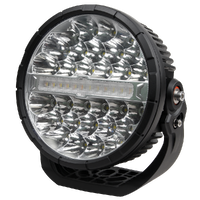
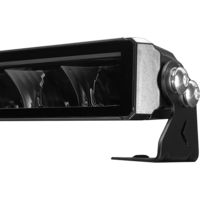
The Whitevision Rayzer™ Series single-row LED light bars are engineered for commercial and trade use, featuring free-form reflector optics for consistent beam distribution and Broadbeam technology for a wide and long-reaching light pattern. The integrated position/DRL function improves vehicle visibility, while the low-profile design suits modern vehicle applications.
Constructed with an anodized aluminium housing, polycarbonate lens, and sealed to IP67, the Rayzer™ Series is designed to withstand harsh Australian conditions including dust, vibration, and moisture. With ECE approval and 10–30V Varivolt® compatibility, it is suitable for a wide range of vehicles from 12V passenger vehicles through to 24V commercial applications.
Before You Start
Before installation begins, confirm the following:
Check local regulations regarding auxiliary lighting, including mounting position and wiring requirements such as high beam integration. In most Australian states, driving lights must only operate with high beam and extinguish when low beam is selected.
Confirm the correct light bar size for the vehicle. The Rayzer™ Series is available in 12”, 22”, 32” and 42” configurations, with outputs ranging from 4500 to 12500 lumens. Ensure mounting space is adequate and does not obstruct airflow or vehicle sensors.
Ensure you have the correct components. A professional installation requires a wiring harness with relay and fuse protection, appropriate mounting hardware, and correct gauge wiring.
Tools and Materials Required
Socket and spanner set, drill and drill bits if required, crimping tool, wire strippers, electrical connectors, heat shrink, electrical tape, cable ties, mounting hardware, and a suitable wiring harness with relay and fuse.
Step 1: Mounting Location
Select a suitable mounting position such as a bull bar, grille, or roof rack depending on the vehicle and application. Bull bar mounting is typically preferred due to structural strength and compliance.
Ensure the mounting surface is rigid and allows the light bar to be positioned centrally and level. Avoid locations that may introduce vibration or interfere with airflow to the radiator.
Step 2: Install Mounting Brackets
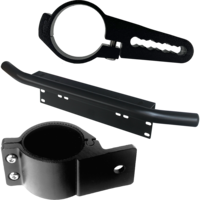
Attach the supplied stainless steel mounting brackets to the light bar. Position the light bar on the vehicle and mark mounting points if required.
Secure the brackets using appropriate bolts or existing mounting points. Ensure all fasteners are tightened correctly and the light bar is firmly secured.
Once mounted, adjust the angle so the beam is directed straight ahead and parallel to the road surface. Final adjustment should be completed after testing.
Step 3: Plan Wiring Route
Plan the wiring path from the light bar to the engine bay, battery, relay, and cabin switch. Use existing loom paths where possible and avoid routing near high heat sources such as exhaust components or moving parts.
Ensure wiring is protected using conduit where required and passes through existing firewall grommets when entering the cabin.
Step 4: Connect Wiring Harness to Light Bar
Connect the light bar to the wiring harness using the appropriate connectors. Ensure all connections are secure, correctly polarised, and weather protected.
For Rayzer™ Series units with integrated position/DRL function, ensure the additional wiring is correctly identified and connected as required.
Step 5: Install Relay and Fuse
Mount the relay in the engine bay close to the battery. The relay should be secured to a solid surface and positioned to minimise exposure to water and heat.
Install the inline fuse on the positive cable between the battery and relay. This protects the circuit and must match the current draw of the selected light bar.
Step 6: Connect to Battery
Connect the positive and negative terminals of the wiring harness to the battery. Ensure all connections are tight and free from corrosion.
Do not insert the fuse at this stage until all wiring is complete.
Step 7: High Beam Integration and Switch Installation
Connect the trigger wire to the vehicle’s high beam circuit using a suitable adapter or connection method. This ensures the light bar operates in compliance with road regulations.
Install the switch inside the cabin in a suitable location accessible to the driver. Route wiring through the firewall using existing grommets and ensure cables are protected from abrasion.
Step 8: Test the System
Insert the fuse and power the system. Test the light bar operation by activating high beam and the switch.
Confirm that the light bar activates correctly, switches off with low beam, and operates without flickering or voltage drop.
Check the position/DRL function if applicable.
Step 9: Final Adjustment and Securing
Adjust the beam angle to ensure optimal visibility without causing glare. The beam should project forward evenly and not point upward.
Secure all wiring using cable ties, ensuring it is clear of moving parts, sharp edges, and heat sources. Refit any panels or components removed during installation.
Performance Considerations
The performance of a light bar is heavily influenced by beam pattern and output. The Rayzer™ Series uses free-form reflector technology to deliver a consistent combination beam, providing both distance and width. This makes it suitable for highway driving, rural roads, and off-road conditions.
With outputs ranging from 45W to 150W and up to 12500 lumens, correct sizing is important. Larger bars provide increased spread and distance but must be matched to vehicle size and application.
Durability and Compliance
For trade and OEM applications, durability and compliance are critical. The Rayzer™ Series features an IP67 rating, ensuring protection against dust ingress and water immersion. The polycarbonate lens provides high impact resistance, while the aluminium housing supports heat dissipation and structural integrity.
ECE approval ensures the product meets international lighting standards, making it suitable for compliant road use when installed correctly.
Common Installation Mistakes to Avoid
Mounting on unstable surfaces leading to vibration and premature failure. Poor wiring routing causing damage from heat or abrasion. Incorrect fuse sizing leading to electrical faults. Lack of relay use causing circuit overload. Incorrect beam alignment reducing visibility or causing glare. Not integrating with high beam leading to non-compliance.
Final Thoughts
A correctly installed light bar significantly improves visibility, safety, and operational efficiency. For auto electricians, OEM builders, and trade professionals, following a structured installation process ensures reliability and compliance.
The Whitevision Rayzer™ Series is designed to simplify installation while delivering consistent, high-performance lighting across a wide range of applications. With robust construction, advanced optics, and commercial-grade durability, it is built for long-term performance in demanding environments.
Simplify Your Installation
For installers looking to reduce time and complexity, using a purpose-built wiring solution can significantly streamline the process.
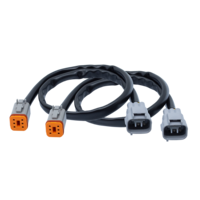
The Whitevision Rayzer™ Plug and Play Wiring Kit is designed specifically for light bars with multiple functions. It features a single DT connector with integrated auxiliary wiring, allowing quick connection for DRL, park, indicator, or warning functions without additional splicing.
The kit includes relay, switch, fuses, and H4/HB3 adapters, enabling high beam integration out of the box. Intelligent polarity detection allows compatibility with both positive and negative switching systems, while support for both 12V and 24V makes it suitable across passenger, trade, and commercial vehicles.
With heavy-duty wiring in protective conduit, it is built to handle harsh environments including fleet and mining applications, while delivering a faster, cleaner and more reliable install.